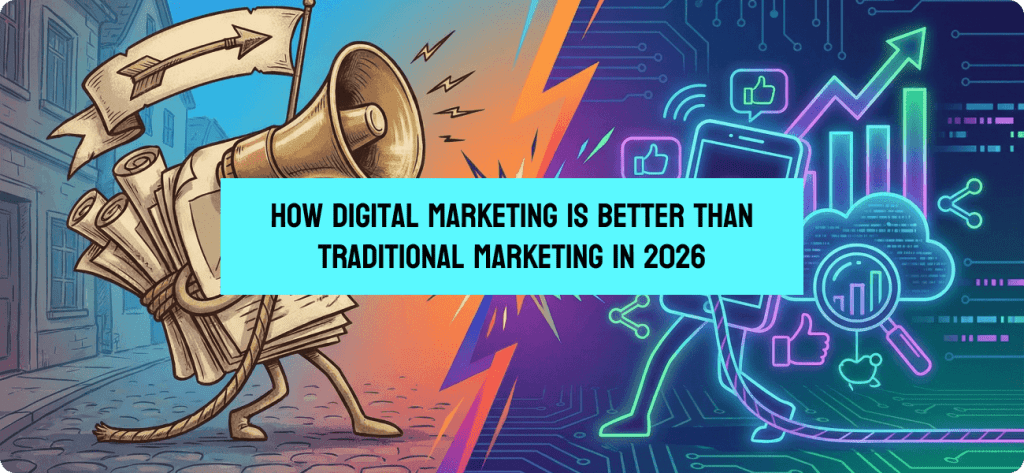
How Digital Marketing Is Better Than Traditional Marketing in 2026

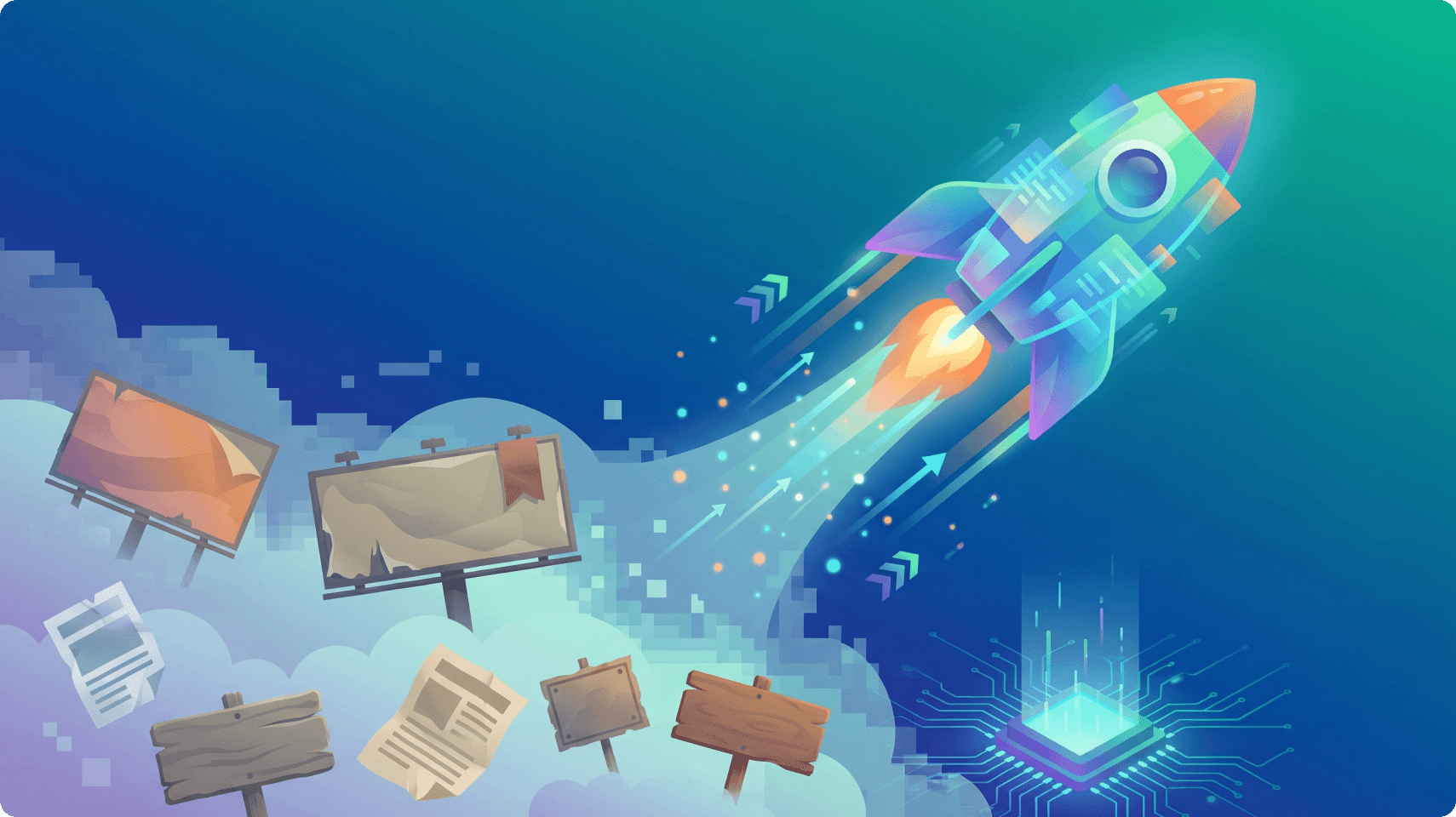
Promoting your business in 2026 is more competitive than ever. Marketing is no longer limited to basic visibility — it now revolves around precision targeting, AI-powered discoverability, and measurable ROI. The debate around digital marketing vs traditional marketing continues, but data clearly shows that digital-first strategies outperform legacy approaches across industries.

While traditional marketing still has a place in brand awareness campaigns, digital marketing has become the primary growth engine for businesses seeking scalable success. From content marketing to social media marketing and the rapid adoption of AI in digital marketing, modern brands are leveraging technology-driven channels to stay ahead.

In this guide, we explore why digital marketing is superior, analyze key channels, and highlight emerging digital marketing trends 2026 that are shaping the future of business promotion.

What Is Digital Marketing?

Digital marketing refers to promoting products and services using online platforms and digital technologies such as websites, search engines, mobile apps, social networks, and marketing automation systems.In 2026, digital marketing goes beyond ranking on traditional search engines. Businesses must optimize for:
  • Search engine optimization (SEO)
  • AI-powered search and generative platforms
  • Voice and conversational search
  • Multi-platform content discovery
  • Personalized digital experiences
This evolution ensures brands maintain visibility wherever users search, browse, or interact online.

Major Types of Digital Marketing

Modern digital marketing operates through an integrated multi-channel ecosystem. The most impactful strategies include:

Search Engine Optimization (SEO) and AI Search Optimization

SEO remains a foundation of digital marketing by improving organic rankings on Google and Bing. However, with the rise of AI in digital marketing, businesses now optimize content for generative search platforms and AI-powered answer engines.

This dual approach allows brands to:

  • Rank higher in traditional search results
  • Appear in AI-generated recommendations
  • Build topical authority
  • Capture high-intent organic traffic

Content Marketing

Content marketing focuses on creating high-value educational and promotional content that attracts, engages, and converts audiences. Popular content formats include:

  • Blog articles and guides
  • Video marketing and reels
  • Infographics and visual assets
  • Email newsletters
  • Whitepapers and ebooks

Strong content marketing supports SEO, boosts AI discoverability, and establishes brand credibility across digital platforms.

Social Media Marketing

Social media marketing remains one of the fastest-growing digital channels in 2026. Platforms such as Instagram, LinkedIn, YouTube, and emerging AI-driven networks allow brands to:

  • Build communities
  • Increase engagement
  • Drive referral traffic
  • Improve brand recall
  • Generate leads through targeted campaigns

Social platforms also integrate seamlessly with paid advertising and content marketing strategies.

Paid Advertising and Performance Marketing

Paid search and social advertising provide immediate traffic and conversion opportunities. Digital marketing platforms enable advanced targeting based on:

  • Demographics and interests
  • Location and behavior data
  • Purchase intent signals
  • Device usage patterns

Performance marketing data also supports long-term SEO and content optimization strategies.
What Is Traditional Marketing?

Traditional marketing includes offline advertising channels such as television commercials, radio ads, newspaper placements, billboards, flyers, and print media.While traditional marketing can still deliver brand exposure, it lacks:
  • Precise audience targeting
  • Real-time performance tracking
  • Cost efficiency
  • Personalization capabilities
  • Conversion attribution
These limitations make it less adaptable compared to modern digital marketing systems.

Digital Marketing Trends 2026 Shaping Business Growth

Several emerging trends are redefining how businesses market online:
  • Increased adoption of AI in digital marketing for personalization and automation
  • Voice and conversational search optimization
  • Short-form video dominance 
  • First-party data marketing strategies
  • Predictive analytics and smart automation
  • AI-powered content discovery
Businesses adopting these digital marketing trends 2026 gain a significant competitive advantage.

Digital Marketing vs Traditional Marketing: Final Comparison

Traditional marketing focuses on mass exposure. Digital marketing focuses on performance-driven growth.Digital strategies offer:
  • Measurable ROI
  • Audience targeting precision
  • Long-term SEO value
  • Multi-platform reach
  • Revenue attribution tracking
This makes digital marketing the preferred approach for startups, ecommerce brands, enterprises, and service-based businesses.

FAQ's

1. Why is digital marketing better than traditional marketing in 2026?

Digital marketing is better than traditional marketing in 2026 because it offers better targeting, measurable ROI, real-time performance tracking, and stronger visibility across search engines, social media, and AI-powered platforms.

The main difference is that digital marketing uses online channels like websites, SEO, social media, and paid ads, while traditional marketing relies on offline methods such as TV, radio, newspapers, and billboards.

Some of the biggest advantages include:

  • Lower cost and better budget control
  • Real-time analytics
  • Precision audience targeting
  • Personalized marketing campaigns
  • Better conversion tracking

Yes, digital marketing is generally more cost-effective because businesses can start with flexible budgets, optimize campaigns based on performance, and generate long-term traffic through SEO and content marketing.

The major types of digital marketing in 2026 include:

  • Search Engine Optimization (SEO)
  • AI search optimization
  • Content marketing
  • Social media marketing
  • Paid advertising and performance marketing
  • Email marketing and automation

AI is changing digital marketing by improving personalization, audience targeting, content discovery, predictive analytics, and visibility on generative search platforms and answer engines.

Digital marketing benefits almost every business type, including startups, ecommerce brands, service providers, and enterprises, because it helps them reach the right audience and scale growth more efficiently.