

LATEST BLOGS




do you need project estimate
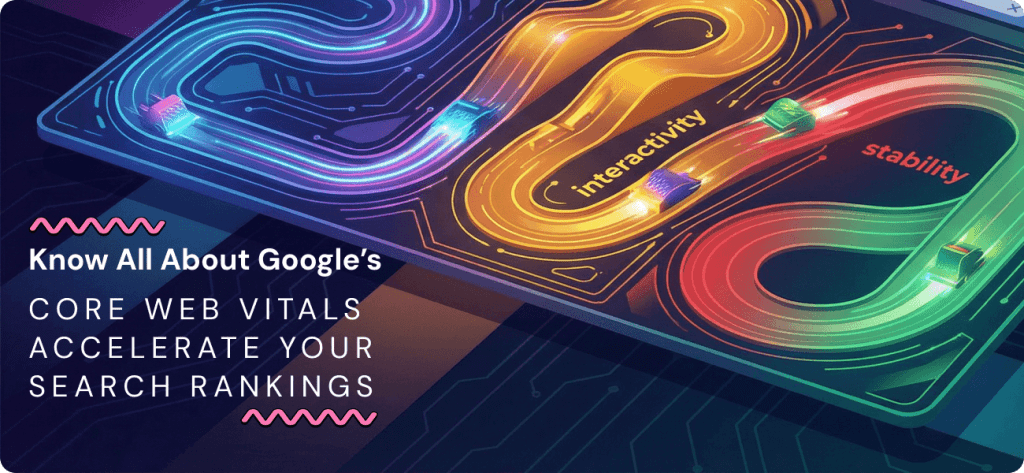
Know All About Google’s Core Web Vitals – Accelerate Your Search Rankings
What are Google’s Core Web Vitals, and how do they impact your website’s SEO performance, search rankings, and long-term search visibility? Why has Core Web Vitals optimization become essential for businesses competing in an AI-driven and mobile-first search ecosystem?
In this comprehensive guide, you will learn how Google measures real-world user experience, how Core Web Vitals affect page experience signals, and what actionable steps you can take to improve performance and organic growth.
Why Are Google’s Core Web Vitals Important?
Google introduced Core Web Vitals to evaluate real user experience rather than relying solely on backend performance metrics. These signals focus on speed, interactivity, and visual stability — three critical factors that directly influence SEO performance and website engagement.
Research consistently shows that over 50% of users abandon websites that take more than three seconds to load. Slow-loading pages reduce search visibility, increase bounce rates, and negatively affect conversion performance.
From Google’s perspective, fast and stable websites create better experiences. As a result, websites with optimized Core Web Vitals are more likely to achieve stronger search rankings across competitive keywords.
Drawbacks of Using Shopify for SEOWhat Are Google’s Core Web Vitals?
- Largest Contentful Paint (LCP) — Loading performance
- Interaction to Next Paint (INP) — Responsiveness and interactivity
- Cumulative Layout Shift (CLS) — Visual stability
Largest Contentful Paint (LCP)
Recommended Performance Targets:
- Good: Under 2.5 seconds
- Needs Improvement: 2.5 to 4 seconds
- Poor: Over 4 seconds
How to Improve LCP Performance
- Enable Server and Browser Caching Caching reduces server response time and speeds up content delivery, improving loading performance.
- Reduce Third-Party Scripts Unnecessary plugins, widgets, and tracking scripts delay rendering. Removing them improves page speed and Core Web Vitals optimization.
3. Optimize Media Assets Compress images, use next-gen formats, and implement lazy loading to reduce page weight and improve loading efficiency.
Interaction to Next Paint (INP)
Recommended Performance Targets:
- Good: Under 200 milliseconds
- Needs Improvement: 200 to 500 milliseconds
- Poor: Over 500 milliseconds
How to Improve INP Performance
- Reduce JavaScript Execution Time Split large JavaScript bundles and defer non-critical scripts to improve responsiveness.
- Use Performance Monitoring Tools Tools such as Lighthouse, Chrome DevTools, and Core Web Vitals reports help identify interaction delays and bottlenecks.

Cumulative Layout Shift (CLS)
Recommended Performance Targets:
- Good: ≤ 0.1
- Needs Improvement: 0.1 to 0.25
- Poor: Above 0.25
How to Improve CLS Performance
- Define Media Dimensions Always specify width and height attributes to prevent layout jumps.
- Control Advertisement Placement Avoid placing ads near the top of the viewport, which often causes content shifting.
- Optimize UI Components Prevent banners and pop-ups from pushing content downward after page load.
Should You Invest in Core Web Vitals Optimization?
- Search rankings
- SEO performance
- Mobile usability
- Bounce rate reduction
- Conversion growth
- Long-term search visibility
Do You Need Professional Help?
- Improve website speed and stability
- Strengthen SEO performance
- Increase organic traffic
- Enhance user experience
- Maximize revenue potential